


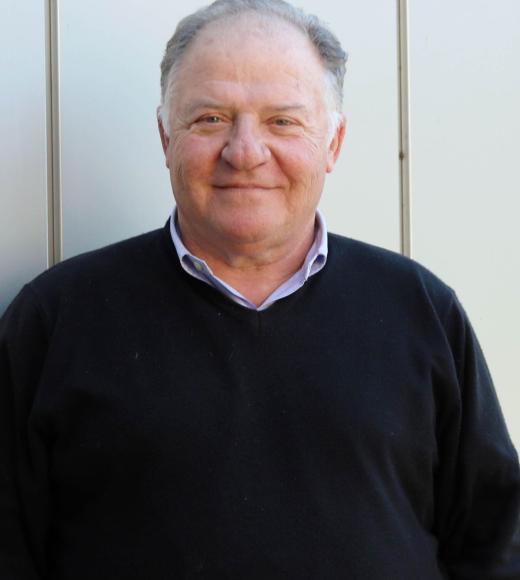
Position Title
Distinguished Professor and Will W. Lester Endowed Chair
Position Title
Distinguished Professor and Will W. Lester Endowed Chair
- Emeriti
1119 PRB
UC Davis, One Shields Ave, Davis CA 95616
UC Davis, One Shields Ave, Davis CA 95616
Bio
Education:
- Ph.D., Hebrew University of Jerusalem (Israel), and University of California, Berkeley; Bioenergetics, 1983
- M.Sc., Hebrew University of Jerusalem (Israel); Plant Physiology, 1981
- B.Sc., Hebrew University of Jerusalem (Israel); Soil and Water Sciences, 1980
Research interests and expertise:
We use a Systems Biology approach (that combines genomics, proteomics, metabolomics and enzyme function analysis) to identify genes and gene networks mediating the response(s) of crop plants to abiotic stresses. We focus on the mechanisms associated with ion homeostasis, source/sink relationships, and nutrient use efficiency to generate transgenic crops with increased stress tolerance and improved yield.
Current projects:
- SyPro Poplar: Improving Poplar Biomass Production under Abiotic Stress Conditions: an Integrated Omics, Bioinformatics, Synthetic Biology and Genetic Engineering Approach. (DOE)
- The plasticity of plant water management behavior (USA-Israel Bionational Science Foundation)
- Engineering Nitrogen-Fixing Rice (Industry)
- Peanut transformation and Nutritional Improvement (Industry)
- The cellular and molecular bases of fruit quality (Will. W. Lester Endowment)
Current teaching:
- Plant Science Laboratory; PLS 100AL (fall quarter)
- Plant Biotechnology; BIT 162B (spring quarter)
- Plant Biology Graduate Core Course; PBI 200C (spring quarter)
Outreach and Extension:
- Permanent contacts with Commodity Boards, and the food and biotechnology industry
External activities that contribute to scholarship:
- Editor-in-Chief; Plant Science
- Editorial Board; Molecular Plant
- Editorial Board; Trends in Plant Science
- American Society of Plant Biologists, Award Nominations Committee
Prizes, Awards, Honors
- Corresponding Member, National Academy of Agriculture and Veterinary, Argentina, 2017
- Fellow, American Society of Plant Biologists, 2014
- REDBIO, Food and Agriculture Organization of the United Nations, Gold Medal, 2013
- Loomis Distinguished Lecturer, Iowa State University, 2012
- Fellow, American Association for the Advancement of Science (AAAS), 2011
- Fellow, Japan Society for the Promotion of Science, 2008
- Alexander von Humboldt Prize, 2003
- Victor M. Bendelow Memorial Lectures. University of Manitoba, 1996
- Steacie Memorial Fellow, National Sciences and Engineering Research Council of Canada, 1995
- University Research Fellow, National Sciences and Engineering Research Council of Canada, 1987
Keywords:
- Plant membrane transport
- Plant adaptation of abiotic stress
- Systems biology
- Global climate change
- Biological nitrogen fixation
- Plant source/sink relationships
- Transgenic plants
- Fruit trees
- Fruit quality
- Fruit postharvest