



Help for Bean Breeders: Gene Found that Controls Seed Pod Shattering
UC Davis Leads Nationwide Team to Discover How and Where Beans Were Domesticated in Ancient Americas
Quick Summary
- Genetic analysis by a team led by Travis Parker points to beans’ earliest domestication in Jalisco, Mexico.
- In addition to the already known second domestication region in the southern Andes, researchers confirmed a third site of proto-domestication in the northern Andes.

Deep in the genes of beans’ wild relatives lie clues that could help people develop new varieties that confront modern problems. These clues – uncovered by researchers in the UC Davis Department of Plant Sciences – also confirm that beans were first domesticated in west-central Mexico, after more than a decade of controversy.
The work comes from Travis Parker, an assistant professional researcher in the department and the project’s principal investigator. A paper describing the discovery was published in the high-impact journal Molecular Plant, with first author Burcu Celebioglu, a postdoc in Parker’s lab, and Paul Gepts, a long-time bean expert and professor emeritus with the department.
Knowing the genetic mutations that allowed domestication is useful today. “Breeders need a roadmap of the genome to understand the traits they need and how they are related to each other,” Parker said.
Common beans are an important source of protein and other nutrients around much of the world, especially in Latin America and parts of Africa. With their high protein content – as much as 30% – beans also offer an attractive alternative to animal protein.
Parker’s team discovered that the gene PvMYB26 controls the forces that, in the wild, would make bean pods shatter. It’s a key gene among those regulating lignin, a structural compound that helps make things stiff, like the stem of a plant or the pod holding its seeds. When PvMYB26 does its job, the amount of lignin in seed pods is high. “They develop a strong, spring-like coiling force,” Parker explained, so when the pod ripens – click! – it pops open and scatters beans everywhere.
The research builds on work Parker has been pursuing for close to a decade to understand the domestication process in beans, including pod shattering. The trait is a great dispersal strategy in the wild, he said, but prevents the seeds from being harvested for agriculture.
But several thousand years ago in west-central Mexico, the gene mutated naturally. The new version of PvMYB26 caused less lignin to develop in the pod. Most pods with the new version of the gene no longer shattered when ripe.

Some observant folks in what is now the Mexican state of Jalisco noticed pods still holding their seeds and realized the potential benefits, Gepts speculated. Eventually, they planted these valuable seeds, and their progeny continued with the no-shattering trait. Meanwhile, other people in nearby regions were domesticating corn and squash. Eventually, people brought the three plants together to create a nutrition-sharing cropping system known as “the three sisters,” used in Mexico to this day and called the “milpa.”
Funding for Parker’s research came, in part, from a competitive grant he won from the Agriculture and Food Research Initiative; AFRI is part of the National Institute of Food and Agriculture, a branch of the United States Department of Agriculture. Funding also came from the Kirkhouse Trust SCIO.
The Parker team included scientists from the UC Davis Department of Plant Biology, North Dakota State University and the National Center for Genome Resources.
Early evidence of third domestication in northern Andes
To track down where pod shattering got lost, scientists studied beans from 327 samples of both domesticated and wild varieties collected in Mexico and Central and South America. Most of the samples were sequenced by the team of Jayanta Roy and the late Phillip McClean of North Dakota State University. In collaboration with Andrew Farmer and Stef English of the National Center for Genome Resources, scientists used a variety of tools to analyze and compare genes from the different populations.
They found the PvMYB26 mutation in nearly every domesticated bean, while the original form of the gene was found in nearly every wild bean.
“If nearly all domesticated beans carried an identical genetic sequence, then finding wild plants with nearly the same sequence – but lacking the critical mutation – would show where the original source population for this domestication occurred,” Parker said.
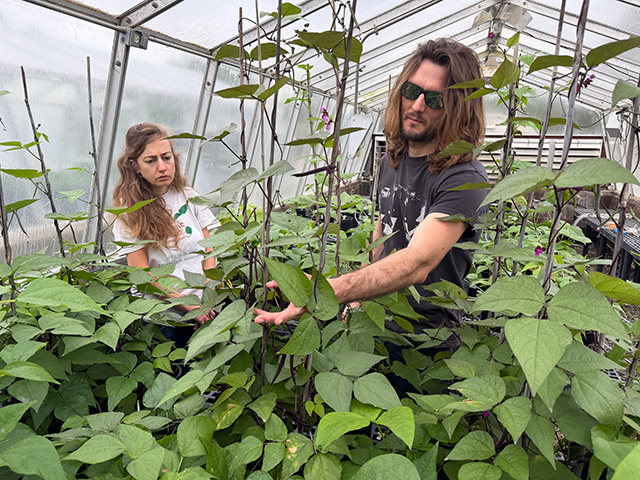
Their comparisons revealed that wild plants from eastern Jalisco and northern Michoacan, the neighboring state, were extraordinarily similar to the domesticated beans – with the exception of the key change in the PvMYB26 gene.
This strongly supports the Jalisco area as the first location of bean domestication in Mesoamerica, Celebioglu wrote.
In addition, Jack Xu and Xingyao Yu of the UC Davis Department of Plant Biology showed that the PvMYB26 gene becomes active in a layer of the bean pod, leading to shattering when the pod ripens. In contrast, the domesticated varieties with the “new” version of the gene produce about half as much lignin in the pod, with low levels of coiling and twisting.
The Parker team also found that the same gene mutated – although differently – in beans from the previously known second domestication area, in the southern Andes of Argentina and Bolivia. These two gene pools were domesticated independently and thousands of miles apart. Yet, changes in the same gene led to this crucial domestication change in each population, Parker noted.
Importantly, the scientists found that a third mutation of the same gene arose in a third, geographically isolated gene pool of beans in Ecuador and northern Peru. Common beans here have always been considered un-domesticated.
“This is preliminary evidence that a third domestication event may have occurred – or at least started – in this single species.” Parker said. “If so, these plants later crossed with other domesticated beans, making it hard to identify without modern genomic tools.”
Tracking an idea for more than 40 years
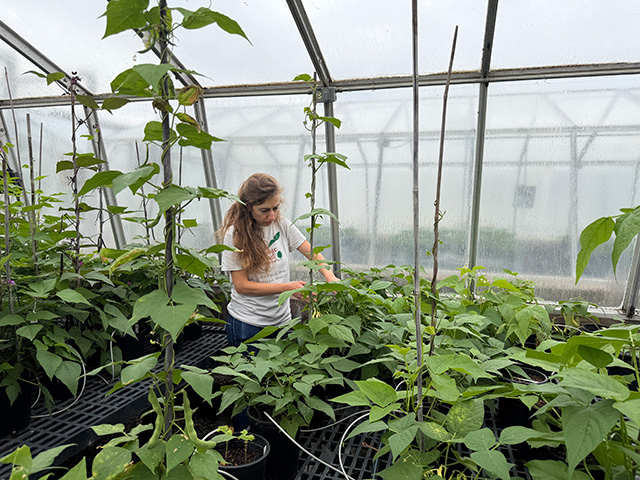
These discoveries are especially gratifying for Gepts, who called them “a culmination of a major thread in my research career.” Gepts had proposed the Jalisco region as beans’ earliest domestication locale more than 40 years ago.
Since then, more work pointed toward bean domestication there and in a separately location in South America.
Later, work by European colleagues shifted the focus of possible Mesoamerican domestication to farther south in Mexico, in what is now Oaxaca state.
This latest research, however supports Gepts’ original argument, using more advanced tools and diving deeply into the population genetics and biochemistry related to the changes that allowed for domestication, Parker said.
For breeders, it’s valuable to understand the historical events that led to certain traits coming together in our domesticated plants. “It informs the larger effort to improve modern crops,” Parker added.
“Plant breeding is an important part of having a safe, nutritious food supply without requiring more fertilizer, water and land,” Parker explained. “As breeders, understanding these genetic and historical patterns helps us understand what we are working with, so we can deliver improved varieties.”
Award-winning research
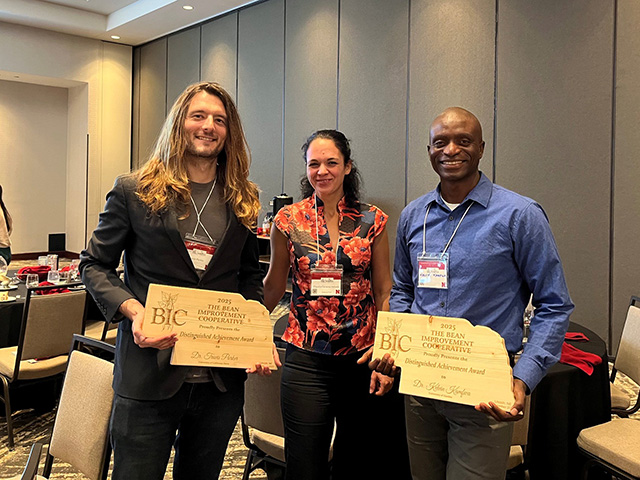
Parker’s research has been recognized with a series of awards. Most recently, he earned the Distinguished Achievement Award from the international Bean Improvement Cooperative, awarded at their biennial meeting in 2025.
He also won first place for poster presentations in the early career category from the National Association of Plant Breeders at their annual meeting in 2025.
Related links
Read the paper here: “Domestication-related changes at PvMYB26 reduce pod shattering in common bean and shed light on the origins of agriculture in the Americas,” by first author Burcu Celebioglu and including Paul Gepts and principal investigator Travis Parker.
Since publication of this paper, senior author Travis Parker accepted a tenure track position as an assistant professor for vegetable breeding at Oregon State University.
First author Burcu Celebrioglu is now a post-doctoral researcher in Parker’s lab at OSU.
Media Resources
- Trina Kleist is a communications specialist with the UC Davis Department of Plant Sciences. [email protected] or (530) 601-6846 or (530) 754-6148.