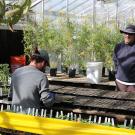
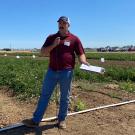
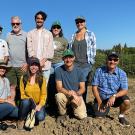
Faculty and grad students mentor local high schoolers as part of a national program to share what they have learned with a new generation of scientists.
To celebrate Picnic Day, the Drakakaki Lab is giving away pistachio snacks and offering fun facts about the science of pistachios: how they are able to withstand salt and drought stress, exactly how that shell splits and more!
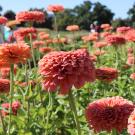
The SCOPE student-led organic breeding program is aiming for the release of new flower and crop varieties in the next year or two. Farmers interested in collaborating with field trials now are encouraged to contact the program.
Graduate students Ali Said Yusuf, Will Hazzard and Zhenglin Zhang won $12,500 for their project developing a culturally relevant, high-fiber food as part of the 25th annual UC Davis Big Bang! Business Competition. The competition helps scientists learn how to apply their research to real-world needs.
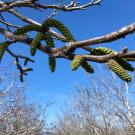
Walnut trees don't need water early in the season. Supported by a $1.3-million USDA grant, UC Davis scientists are field-testing a new method that lets the trees tell farmers when to start irrigation, saving time, money and a precious resource.
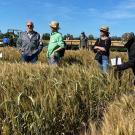
Department researchers are revealing important ways that universities, government agencies and other support organizations can help our food producers develop resilience to environmental challenges and remain profitable.
UC Davis researchers are exploring how byproducts from anaerobic digesters, rich in nitrogen, can serve as fertilizers for wheat and triticale. Early results show promise for forage crops, potentially reducing chemical fertilizer use and costs.
UC Davis' C.M. Rick Tomato Genetics Resource Center supports global tomato breeding. Picnic Day visitors can get tomato starts and learn about tomato history. The event highlights the crop’s economic impact, genetics, and growing tips.
Matthew Fatino, a Ph.D. candidate in UC Davis' Department of Plant Sciences, was named WSSA graduate student of the month. Passionate about weed science, his research focuses on in-season management of branched broomrape, a threat to California's tomato and seed industries.
UC Davis’ SCOPE program received a $2M USDA grant to expand student-led organic plant breeding. New crops, new partners, and collaboration with UC Santa Cruz aim to share the model and support organic agriculture across climates.