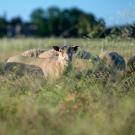
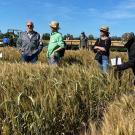
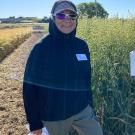
Leslie Roche has received the Outstanding New Academic Award from University of California Agricultural and Natural Resources. Roche is an associate professor of Cooperative Extension, based in the Department of Plant Sciences. Her research looks at the agricultural, environmental and social aspects of ranching and livestock production.
UC Davis agronomist Bruce Linquist was named a 2024 Soil Science Society of America Fellow for his leadership in sustainable rice farming. His research on reducing tillage and water use helps farmers cut costs while improving soil health.
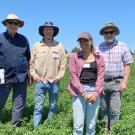
Four students connected to the UC Davis Department of Plant Science have received grants from the Milton D. and Mary M. Miller Plant Science Award, which supports learners interested in careers with Cooperative Extension. The 2024 awardees are Maya Shydlowski, Erika Escalona, Sam Dudley and Ben Baldi. All four students said they are eager to share what they are learning with people in the field who need solutions for everyday problems.
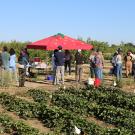
Advances in breeding and postharvest handling in strawberries and tomatoes, aimed at reducing the costs of disease in the field and in postharvest, were on display at the recent Strawberry Disease Field Day, hosted by the UC Davis Strawberry Breeding Program.
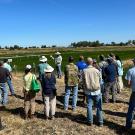
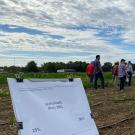
California farmers spend over $900M annually on weed control. At UC Davis Weed Day 2024, researchers shared updates on herbicide drift, native plants for weed control, irrigation impacts, and new weed-zapping technology for organic orchards.
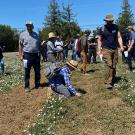
The Diagnosing Herbicide Symptoms field day at UC Davis trained growers and researchers to identify crop damage causes, from herbicides to water stress. Experts emphasized detective work, careful application, and alternative explanations like pests or soil issues.
UC researchers spent 20 years studying conservation agriculture in California, testing no-till, cover cropping, and residue management. Their findings show long-term benefits for soil health, water retention, and crop resilience, guiding future farming.
Alfalfa offers a drought-resilient, high-protein crop for both livestock and human use. UC Davis researchers are exploring ways to improve yield, protein extraction, and resilience while testing almond shells as a soil amendment to enhance water infiltration.
UC Davis researchers are exploring how byproducts from anaerobic digesters, rich in nitrogen, can serve as fertilizers for wheat and triticale. Early results show promise for forage crops, potentially reducing chemical fertilizer use and costs.
UC Davis researchers are developing wheat and barley varieties to withstand drought, salinity, and climate change. Innovations include dual-purpose wheat, non-allergenic grains, drone monitoring, and water-efficient farming to support growers.