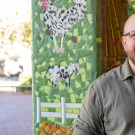
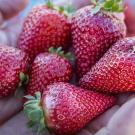
Mitchell Feldmann, an assistant professor and genetics researcher, is the new director of the Strawberry Breeding Program, an internationally recognized public program that has released more than 70 patented cultivars over its storied history.
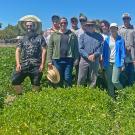
UC Davis researchers are developing improved lima bean varieties suited for U.S. climates. By studying wild genetics and breeding for heat tolerance, yield, and nutrition, they aim to expand lima bean cultivation and consumer appeal nationwide.
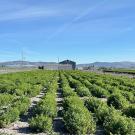
A nation-wide project led by Charlie Brummer, a professor in the UC Davis Department of Plant Sciences, has received a grant of $936,000 over the next three years from the Alfalfa Seed and Alfalfa Forage Research Program, within the USDA’s National Institute of Food and Agriculture. Scientists are seeking the genetic basis for breeding new varieties of alfalfa that can withstand the pressures of climate change and evolving pests and disease.
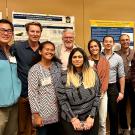
Alfalfa expert Charlie Brummer says it's time to "think about redesigning the alfalfa plant from first principles," after 40 years of frustrated efforts to increase yield. He made the remarks at a recent meeting of the North American Alfalfa Improvement Conference. Students also presented their research, including trials to grow the crop with less water.
Venkatesan Sundaresan has won a Wolf Prize in Agriculture for developing "synthetic apomixis." The method for creating clonal seed at greatly reduced cost is a boon to agriculture, especially for farmers in developing countries.
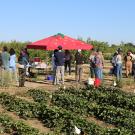
Advances in breeding and postharvest handling in strawberries and tomatoes, aimed at reducing the costs of disease in the field and in postharvest, were on display at the recent Strawberry Disease Field Day, hosted by the UC Davis Strawberry Breeding Program.
UC Davis graduate Joseph Urias, a first-gen student, combined hands-on work at Planting Justice with studies in horticulture. Now, he aims to connect sustainable agriculture with food systems, bridging academia and community initiatives.
UC Davis is ending its strawberry licensing agreements with Eurosemillas due to contract issues. The university aims to ensure stable access to its strawberry varieties while continuing to support growers, research, and the global strawberry market.
Alfalfa offers a drought-resilient, high-protein crop for both livestock and human use. UC Davis researchers are exploring ways to improve yield, protein extraction, and resilience while testing almond shells as a soil amendment to enhance water infiltration.
UC Davis researchers are exploring how byproducts from anaerobic digesters, rich in nitrogen, can serve as fertilizers for wheat and triticale. Early results show promise for forage crops, potentially reducing chemical fertilizer use and costs.