Arnold Bloom proposes a newly identified “Bloom cycle” within photorespiration, offering new insights for breeding crop plants that are productive, nutritious and resist pests amid warming temperatures.
Salmonella somehow induces the production of a chemical hormone called auxin, which gives a kind of false “all-clear” signal that causes the poor plant to open its gates and let the squatter in.
Researchers in the Andrew Latimer lab at the UC Davis Department of Plant Sciences are creating a model to predict when pine cone seeds will ripen, aiding efforts to reforest areas scorched by wildfire.
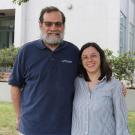
Arnold Bloom is featured in a series about aptly named Aggies. That’s because his name is an aptronym -- suited to his profession or personality. He is also a distinguished professor in the UC Davis Department of Plant Sciences.
The prize-winning science of Venkatesan Sundaresan is an example of how federally funded research leads to real-world benefits for ordinary people. His work is featured in the UC Davis "From Labs to Lives" initiative.
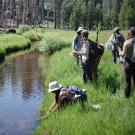
A unique partnership takes UC Davis students to Lassen Volcanic National Park to study the flora of this special area in far-northeastern California. Local communities and park visitors benefit, too.
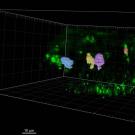
UC Davis researchers used advanced microscopy to observe plant cell division in real-time, uncovering three phases of cell wall formation. Their work, published in the Journal of Experimental Botany, provides insights into cytokinesis and material recycling.
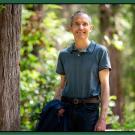
Daniel Potter is the new chair of the UC Davis Department of Plant Sciences, overseeing research, teaching, and outreach. A botanist and herbarium director, he aims to improve student connections and expand lab space.
The UC Davis Center for Plant Diversity Herbarium houses 300,000 preserved plant specimens, serving researchers, students, and the public. Using both traditional and modern techniques, it supports biodiversity studies, ecological research, and digital preservation efforts worldwide.
This year, we are excited for the 2024 UC Davis Plant Sciences Symposium to represent work across the plant sciences with the theme, “Plant diversity from genes to ecosystems.”
UC Davis hosted a USDA working group on indoor farming, gathering U.S. and Canadian scientists to share research on growing food and medicine in vertical farms and greenhouses using controlled environments and LED lights.
The 8th International Symposium on Almonds and Pistachios, hosted by UC Davis, brings experts together to discuss challenges in the tree nut industry, including water scarcity, pests, and climate change. Researchers share solutions for better cultivation.
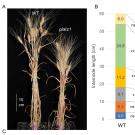
UC Davis scientists have discovered the PLATZ1 gene in wheat. This gene controls plant height and boosts yield, especially in water-scarce conditions. It also helps produce longer coleoptiles for deeper planting, improving moisture access.
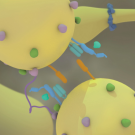
UC Davis researchers, led by Georgia Drakakaki, created a biophysical model and animation to explain cytokinesis, the essential process of plant cell division. Funded by the NSF, the model provides new insights into membrane structures and cell wall formation.
For the sixth year in a row, Department of Plant Sciences faculty Eduardo Blumwald has been named a Highly Cited Researcher by an international database of scientific journals. Blumwald, a plant biologist, is among 10 UC Davis researchers to receive the distinction for 2022.