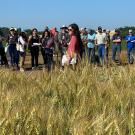
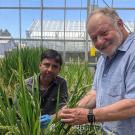
The prize-winning science of Venkatesan Sundaresan is an example of how federally funded research leads to real-world benefits for ordinary people. His work is featured in the UC Davis "From Labs to Lives" initiative.
Cameron Pittelkow is estimating greenhouse gas emissions from alfalfa fields and suggests ways to reduce those emissions depending on region. Valentina Roel-Rezk is measuring the link between organic amendments and GHG emissions.
Department researchers are revealing important ways that universities, government agencies and other support organizations can help our food producers develop resilience to environmental challenges and remain profitable.
Mitchell Feldmann, an assistant professor and genetics researcher, is the new director of the Strawberry Breeding Program, an internationally recognized public program that has released more than 70 patented cultivars over its storied history.
Valentina Roel Rezk was among graduate students from around the world who participated in a summer program seeking to shape future policy and research into circular food and agriculture systems. The program was put on by the Circular Food Systems Network, hosted by Wageningen University & Research, in the Netherlands.
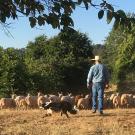
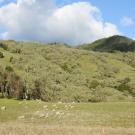
Post-wildfire grazing didn’t significantly raise toxic metals in lamb meat or wool, a UC Davis study found—reassuring news for food safety. Researchers call for continued monitoring as wildfires reshape grazing landscapes.
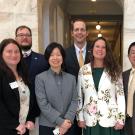
Louise Ferguson led ASHS Leadership Academy fellows to Washington, D.C., to advocate for $1.3B in farm bill research funding. Fellows met with lawmakers to highlight the economic and health impacts of horticultural research.
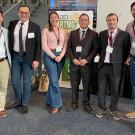
UC Davis researchers presented their rice studies at the 39th Rice Technical Working Group conference in Arkansas. Topics included herbicide programs, weedy rice responses, and the behavior of rice under different treatments, highlighting California's rice research.
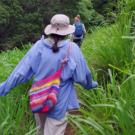
Farmers in Panama are sharing sustainable cattle grazing techniques with peers through Yale’s ELTI program. UC Davis graduate Marina Vergara studied this participatory model, highlighting farmer-to-farmer knowledge exchange, which could influence future extension programs.
UC Davis researchers, led by Eduardo Blumwald, discovered a way to reduce nitrogen fertilizer use in cereal crops like rice by enhancing natural nitrogen fixation. This could save farmers billions and reduce environmental harm.