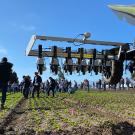
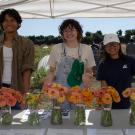
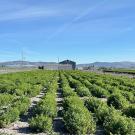
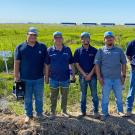
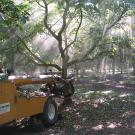
At the Automated Technology Field Day in Salinas, cutting-edge machines tackled weed control with lasers, AI, and robotics. As labor shortages and regulations reshape farming, growers are embracing innovative solutions like canola oil sprayers and smart cultivators to boost efficiency.
UC experts have published “Olive: Production Manual for Oil,” the first U.S. guide for oil olive growers. Covering pruning, irrigation, and harvest timing, the book helps California producers enhance quality and compete in the global market.
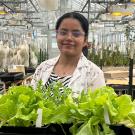
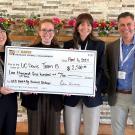
UC Davis doctoral student Samjhana Khanal received a $50,000 Schlumberger Foundation grant for her research on disease-resistant lettuce using CRISPR. Her work aims to reduce crop losses and support sustainable agriculture, including in Nepal.
UC Davis researchers are developing improved lima bean varieties suited for U.S. climates. By studying wild genetics and breeding for heat tolerance, yield, and nutrition, they aim to expand lima bean cultivation and consumer appeal nationwide.
UC Davis’ SCOPE program develops new tomato, zinnia, wheat, and spinach varieties for small-scale organic farmers. Student breeders focus on traits like disease resistance, climate adaptation, and market appeal, collaborating with local growers.
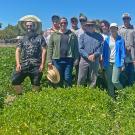
A nation-wide project led by Charlie Brummer, a professor in the UC Davis Department of Plant Sciences, has received a grant of $936,000 over the next three years from the Alfalfa Seed and Alfalfa Forage Research Program, within the USDA’s National Institute of Food and Agriculture. Scientists are seeking the genetic basis for breeding new varieties of alfalfa that can withstand the pressures of climate change and evolving pests and disease.
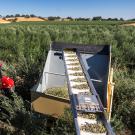
UC Davis researchers are evaluating new herbicides and no-till cultivation methods to address challenges in California rice production, including herbicide resistance, water scarcity, and production costs. Trials indicate potential benefits and trade-offs.
A UC Davis study found most California farmers acknowledge climate change and seek adaptation strategies. Key concerns include water shortages, extreme heat, and wildfires. Farmers need financial aid, research, and policy support to boost resilience.
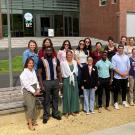
Valentina Roel Rezk was among graduate students from around the world who participated in a summer program seeking to shape future policy and research into circular food and agriculture systems. The program was put on by the Circular Food Systems Network, hosted by Wageningen University & Research, in the Netherlands.
Doctoral student Marie Klein, of the Department of Plant Sciences, was part of a team that took first place in the UC Davis Food and Agriculture Business Case Competition. The event brought together teams from several universities to solve a business challenge for global seed company Hm.Clause. Here, team member and MBA student Danielle Kleiner-Kanter describes their journey to first place. She also offers three tips that helped them grow their business plan from idea to presentation.
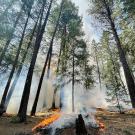
UC Davis research shows low- and moderate-severity wildfires can reduce future fire intensity for up to 20 years. Using satellite data, scientists found past fires help manage fuel loads, offering insights for forest resilience and wildfire mitigation.
UC Davis received a $500K grant to breed drought-tolerant and disease-resistant carrots using wild genetics. Researchers aim to reduce fungicide use and secure crop yields, ensuring a stable carrot supply for growers and consumers.
Leslie Roche has received the Outstanding New Academic Award from University of California Agricultural and Natural Resources. Roche is an associate professor of Cooperative Extension, based in the Department of Plant Sciences. Her research looks at the agricultural, environmental and social aspects of ranching and livestock production.
Researchers have developed best practices for handling walnuts to maintain quality and prevent rancidity. Their award-winning recommendations include timely harvesting, cold storage, and using a color guide to match nuts to the best markets.
UC Davis' Feed the Future Innovation Lab showcased low-cost postharvest technologies to young African leaders. Simple solutions like solar dryers and CoolBot cold rooms can reduce food waste, boost farmer incomes, and improve food security globally.