Steve Fennimore and Kassim Al-Khatib received top honors at a recent meeting of the California Weed Science Society. Plus, three students, also from the UC Davis Department of Plant Sciences, won awards.
Daniele Zaccaria is organizing the 2026 Advanced School on Microirrigation for Crop Production, which will be offered in California for the first time, from March 30 to April 3.
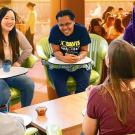
Students from the UC Davis Department of Plant Sciences presented and networked at the recent ASTA 65th Vegetable & Flower Seed Conference, supported by the private-public partnership Seed Central.
Arnold Bloom proposes a newly identified “Bloom cycle” within photorespiration, offering new insights for breeding crop plants that are productive, nutritious and resist pests amid warming temperatures.
The UC Davis SCOPE project prepares students for careers developing the food we'll eat in the future. It's funded through the U.S. Department of Agriculture, an example of taxpayer dollars buying real-world benefits.
Salmonella somehow induces the production of a chemical hormone called auxin, which gives a kind of false “all-clear” signal that causes the poor plant to open its gates and let the squatter in.
A summer abroad program gives students a global perspective on how food systems, agricultural sustainability and communities are connected. Organized by Xiaofei Zhang, UC Davis Department of Plant Sciences.
Venkatesan Sundaresan won a $4.9-million grant from the Gates Foundation to develop money-saving seeds for Indian farmers. He's a distinguished professor in the UC Davis Department of Plant Sciences.
Scientist Shuxiao "Susan" Zhang, in the UC Davis Department of Plant Sciences, studied pistachio hulls at the anatomical and cellular levels, and found genetic links explaining hull split -- a costly problem for California growers.
Researchers in the Andrew Latimer lab at the UC Davis Department of Plant Sciences are creating a model to predict when pine cone seeds will ripen, aiding efforts to reforest areas scorched by wildfire.
The California Native Plant Foods Celebration and Symposium is organized by a team lead by Dan Potter, chair of the UC Davis Department of Plant Sciences. Panelists and demonstrations.
UC Davis Plant Sciences students earned first-place oral and poster awards at the CANVAS annual meeting. Research focused on oak restoration and water-efficient wheat that still delivers strong yields and quality bread.
Rachel Spaeth and other scientists at UC Davis used modern genetic tools to reconstruct the family tree of plums bred by the legendary Luther Burbank. Their model is useful for plant breeders and people who manage seed banks.
Venkatesan Sundaresan and Imtiyaz Khanday, in the UC Davis Department of Plant Sciences, were honored for world-changing work to create hybrid crops that clone themselves. This means farmers can use the plants' seed and still get high yields.
Alessandro Ossola, of the UC Davis Department of Plant Sciences, is working with a diverse team to develop a new kind of medicine that fosters health rather than chases disease.