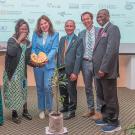
At a Kenya event, the African Orphan Crops Consortium planted a jackfruit tree to symbolize food security and peace. UC Davis' Allen Van Deynze and partners are breeding resilient orphan crops to help small farmers combat climate change and hunger.
Steam treatment offers growers a chemical-free way to control weeds and soil-borne diseases, benefiting both crops and farmworkers. UC Davis research in Salinas shows it boosts yields while preserving soil health, making it a promising tool for organic farming.
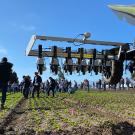
At the Automated Technology Field Day in Salinas, cutting-edge machines tackled weed control with lasers, AI, and robotics. As labor shortages and regulations reshape farming, growers are embracing innovative solutions like canola oil sprayers and smart cultivators to boost efficiency.
UC experts have published “Olive: Production Manual for Oil,” the first U.S. guide for oil olive growers. Covering pruning, irrigation, and harvest timing, the book helps California producers enhance quality and compete in the global market.
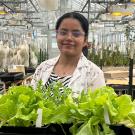
UC Davis doctoral student Samjhana Khanal received a $50,000 Schlumberger Foundation grant for her research on disease-resistant lettuce using CRISPR. Her work aims to reduce crop losses and support sustainable agriculture, including in Nepal.
UC Davis researchers are developing improved lima bean varieties suited for U.S. climates. By studying wild genetics and breeding for heat tolerance, yield, and nutrition, they aim to expand lima bean cultivation and consumer appeal nationwide.
UC Davis’ SCOPE program develops new tomato, zinnia, wheat, and spinach varieties for small-scale organic farmers. Student breeders focus on traits like disease resistance, climate adaptation, and market appeal, collaborating with local growers.
A nation-wide project led by Charlie Brummer, a professor in the UC Davis Department of Plant Sciences, has received a grant of $936,000 over the next three years from the Alfalfa Seed and Alfalfa Forage Research Program, within the USDA’s National Institute of Food and Agriculture. Scientists are seeking the genetic basis for breeding new varieties of alfalfa that can withstand the pressures of climate change and evolving pests and disease.
UC Davis researchers are evaluating new herbicides and no-till cultivation methods to address challenges in California rice production, including herbicide resistance, water scarcity, and production costs. Trials indicate potential benefits and trade-offs.
A UC Davis study found most California farmers acknowledge climate change and seek adaptation strategies. Key concerns include water shortages, extreme heat, and wildfires. Farmers need financial aid, research, and policy support to boost resilience.