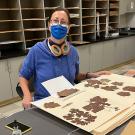
A scraggly grapevine collected in 1906 and stored at the UC Davis Center for Plant Diversity Herbarium has yielded clues to when Pierce's disease arrived in California and how the bacterium that causes it has evolved since then. Scientists hope to use that information to prevent and, eventually, treat the deadly blight, which has spread to wine-growing regions around the world.
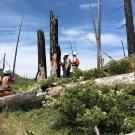
In hotter, drier areas where natural regeneration is weaker, well-timed tree planting can boost post-fire forest recovery by up to 200 percent, according to research by Andrew Latimer and Derek Young, in the Department of Plant Sciences.
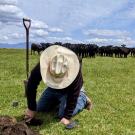
Research shows ranchers benefit from planning for extreme weather, but climate-smart strategies alone aren’t enough. A new $990K USDA grant will support training, outreach, and resources to help ranchers adapt to drought and climate change.
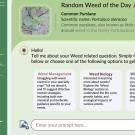
Mohsen Mesgaran, at the UC Davis Department of Plant Sciences, and team are developing a chatbot powered by artificial intelligence to help growers, backyard gardeners, landowners and others identify and treat weeds. The state Department of Food and Agriculture is funding the project with a grant of nearly $430,000. The development is expected to take two years.
A team of scientists, including Gail Taylor of the UC Davis Department of Plant Sciences, has identified a gene in poplar trees that enhances photosynthesis and can boost tree height by as much as 200 percent. Discovery of the “Booster” gene has enormous potential for both the nation’s efforts to create plant-based jet fuel and to boost the yield of key food crops.
UC Davis plant scientists Eduardo Blumwald and Tom Buckley were named 2024 Highly Cited Researchers by Web of Science. Their influential work on crop stress and plant-water relationships ranks in the top 1% of citations, highlighting global impact.
The inaugural Global Food Systems Research Day, held Oct. 24 at UC Davis, underscored the role of scientists in the UC Davis Department of Plant Sciences in the effort to build sustainable agricultural and distribution systems providing nutritious and affordable food to people all over the world.
A new facility to be built east of the UC Davis campus highlights the partnership between the university – including the Department of Plant Sciences – and national agencies to confront challenges faced by consumers and the agriculture industry.
UC Davis’ new USDA-funded program will mentor first-gen and underrepresented students from Butte College in agricultural research. Through hands-on training, workshops, and mentorship, it aims to inspire careers in food, ag, and sustainability.
Mitchell Feldmann, an assistant professor and genetics researcher, is the new director of the Strawberry Breeding Program, an internationally recognized public program that has released more than 70 patented cultivars over its storied history.