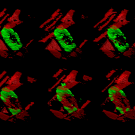
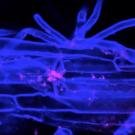
Drakakaki and her research partners have received a $1.2 million, three-year grant from the National Science Foundation to dissect the molecular mechanisms of plant cytokinesis and cell plate development.
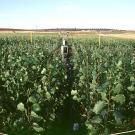
Scientists from the University of California, Davis, and the University of Southampton in the United Kingdom found that specialized outdoor laboratories more closely resemble what happens in nature than was previously realized.
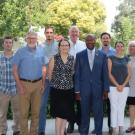
As the Department of Plant Sciences at UC Davis finishes the academic year (2017–18) and embarks on a new year, it’s time to meet six new faculty who joined the department during the last two years.
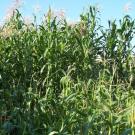
A multidisciplinary team from the University of California, Davis, the University of Wisconsin–Madison, and Mars, Incorporated has found that an indigenous corn variety can “fix nitrogen” from the atmosphere, avoiding the need for synthetic fertilizers.
UC Davis Chancellor Gary May met with Plant Sciences Chair Gail Taylor and a number of faculty and researchers to learn about the breadth and impact of the department, and what makes it the top-ranked Plant Sciences program globally.
A new study led by researchers at the University of California, Davis, suggests that photorespiration wastes little energy and instead enhances nitrate assimilation, the process that converts nitrate absorbed from the soil into protein.
In a paper Joseph Edwards, '17 Ph.D. in Plant Biology, Professor Venkatesan Sundaresan, departments of Plant Biology and Plant Sciences, and their colleagues tracked root microbiome shifts throughout the life cycle of rice plants (Oryza sativa).
Professor David Neale showed in preliminary research that it is feasible to sequence the coast redwood, a complex hexaploid plant (with six sets of chromosomes, compared to humans' two sets). The redwood has a genome 10 times larger than that of humans.
Scientists at the University of California, Davis, are developing additional agricultural methods to offset rising atmospheric greenhouse gas levels, thereby reducing the risk of global warming.