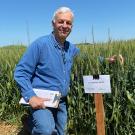
Jorge Dubcovsky, distinguished professor in the Department of Plant Sciences at the University of California, Davis, has been named the 2026 World Agriculture Prize Laureate.
Venkatesan Sundaresan and Imtiyaz Khanday, in the UC Davis Department of Plant Sciences, were honored for world-changing work to create hybrid crops that clone themselves. This means farmers can use the plants' seed and still get high yields.
Jagdish Ladha’s new book outlines how improving nitrogen use efficiency can boost crop productivity, cut fertilizer costs and reduce environmental harm, combining global research insights with practical strategies for more sustainable farming.
Ardeshir Damania has won the Frank N. Meyer Medal for Plant Genetic Resources. A longtime scientist collecting and evaluating wheat genetic resources, he became a research associate in the UC Davis Department of Plant Sciences -- but not before saving the world's wheat genebank.
UC Davis researchers are developing improved lima bean varieties suited for U.S. climates. By studying wild genetics and breeding for heat tolerance, yield, and nutrition, they aim to expand lima bean cultivation and consumer appeal nationwide.
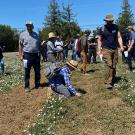
California farmers spend over $900M annually on weed control. At UC Davis Weed Day 2024, researchers shared updates on herbicide drift, native plants for weed control, irrigation impacts, and new weed-zapping technology for organic orchards.
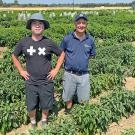
Doctoral student Gen Ha Park was named a George Washington Carver scholar for his work developing heat- and drought-tolerant chile peppers using genomic tools. His research aims to support sustainable farming in a warming climate.
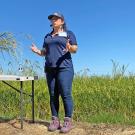
Whitney Brim-DeForest, UCCE rice and wild rice advisor, used her GSR award to research weed management in rice. Her graduate training built strong grower ties and skills now guiding her work in California’s top rice-growing region.
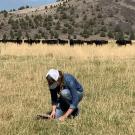
Grace Woodmansee used her GSR award to strengthen her research and outreach skills, preparing her for a career as a UCCE advisor. Her drought-focused work with ranchers now helps support resilient rangeland management in California.
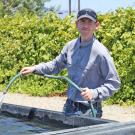
Grant Johnson’s GSR award helped launch his UC Cooperative Extension career in urban ag tech. It supported his research on nursery runoff and gave him skills he now uses to improve irrigation, fertilization, and water reuse.