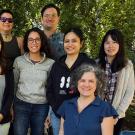
Maeli Melotto, a professor in the UC Davis Department of Plant Sciences specializing in plant immunity, has been recognized as a fellow of the American Association for the Advancement of Science, the world’s largest general scientific society and publisher of the Science family of journals.
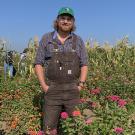
The SCOPE project at UC Davis, led by students, is developing new crop varieties for organic farmers, including improved peppers, tomatoes, sweet potatoes, and flowers. Their work focuses on better taste, disease resistance, and yield.
UC Davis researchers, led by Steve Fennimore, are studying robots that reduce hand-weeding costs and use steam to combat soil pathogens, improving lettuce yields and reducing chemical herbicide use in the process.
Gail Taylor advocates for vertical farming as a solution to urban food security and drought, emphasizing its role in enhancing, not replacing, outdoor agriculture. Her research focuses on making greens like watercress more nutritious for mechanical harvesting.
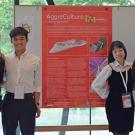
Team AggieCulture competed in the Urban Greenhouse Challenge finals at Wageningen University in the Netherlands, landing in the top five out of over 30 teams. Their "Living Gardens" proposal aimed to create sustainable food systems in food deserts.
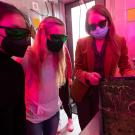
An international team from Rothamsted Research, U.K., visited UC Davis' Department of Plant Sciences, engaging in discussions on wheat genetics, soil management, climate change, and carbon neutrality. Collaborations and research opportunities emerged.
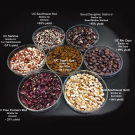
The Department of Plant Sciences has released six new varieties of organic dry beans which are higher yielding, and are resistant to bean common mosaic virus (BCMV), a disease that prevents bean plants from maturing promptly and uniformly.
Is adaptation to cold environments regulated by a few genes, thousands of genes, or a specific set (or different sets) of genes each time? Ross-Ibarra and colleagues are trying to answer these questions.
Sometimes, the evolutionary history of a species can be found in a fossil record. Other times, DNA and genetic fingerprints replace rocks and imprints. That is the case for the carrot, the richest crop source of vitamin A in the American diet, whose full genetic code has been deciphered by a team led by the University of Wisconsin-Madison in collaboration with the University of California, Davis.